S & D Plumbing is now Beyond Wow Plumbing! New name, same ownership.




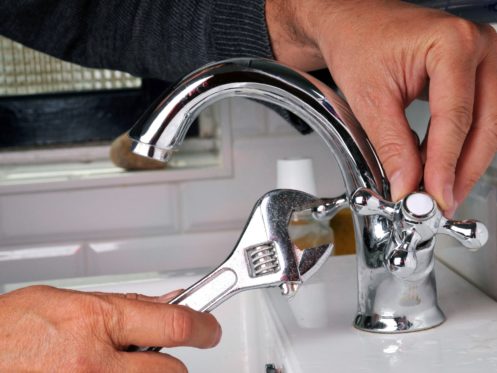
How to Fix a Leaking Faucet and Stop It From Coming Back
At one drip per second, a leaking faucet wastes more than 3,000 gallons of water per year. And in Austin, each of those water drops contains a lot more than just water. Austin’s water flows from the Colorado River through Hill Country limestone geology, picking up calcium and magnesium along the way. That mineral load deposits inside faucet cartridges, roughens valve seats, and degrades O-rings faster than it would in a soft-water city. By the time a faucet starts dripping in a Hyde Park bungalow or a newer build in Pflugerville, the internal components have usually been working against hard water for years. The best way to fix a leaky faucet depends on where the drip comes from and which part has failed, so this guide covers both: how to diagnose and fix the most common faucet and leaking showerhead problems yourself, and when to leave the repair to a licensed plumber.
What Causes a Leaking Faucet?
Most faucet leaks trace back to five common worn parts—and Austin’s heavy mineral content cuts the lifespan of every single one.
Worn rubber washer – The most common culprit. Friction against the valve seat gradually flattens the washer and breaks the seal. Austin’s mineral-heavy water roughens valve seats faster than average, which wears washers down more quickly than the hardware store timeline suggests.
Damaged O-ring – The rubber ring around the stem or cartridge cracks with age, causing leaks at the handle base rather than the spout. In older Travis Heights or Clarksville homes with original fixtures, we routinely pull out O-rings that have been compressing against calcite-coated stems for decades.
Faulty faucet cartridge – Controls the flow of hot and cold water. When worn, the faucet drips even with the handle fully closed. Mineral deposits on the cartridge body are one of the most common things we find on service calls in established Austin neighborhoods.
Loose packing nut – Sometimes the fix is as simple as tightening the packing nut before assuming you need a new part at all.
Corroded valve seat – Sediment and limescale collect where the spout meets the body, creating a rough surface the washer can no longer seal against. A drip from the spout usually points to the washer or cartridge; leaking at the handle base usually means the O-ring or packing nut.
Tools You’ll Need
Gather these before you start:
- Adjustable wrench
- Phillips and flathead screwdrivers
- Allen wrench (hex key)
- Needle-nose pliers
- Replacement washer, O-ring, or faucet cartridge matched to your model
- Plumber’s grease
Take the old part to the hardware store to match it. Washers and cartridges vary by brand and faucet type.
How to Fix a Leaky Faucet: Step by Step
Step 1 – Shut off the water supply.
Turn the valves under the sink clockwise: cold water valve first, then hot. Open the faucet to release pressure and confirm the flow has stopped before touching anything else.
Step 2 – Remove the faucet handle.
Pry off the decorative cap to expose the top screw. Remove the top screw with a Phillips head screwdriver or Allen wrench. Lift the handle straight up off the stem.
Step 3 – Access the cartridge or stem.
Use an adjustable wrench to loosen the packing nut. Pull out the faucet cartridge or stem. For compression faucets, check the rubber washer at the stem base. A flat or cracked washer means you need to replace it. For cartridge faucets, inspect the cartridge body for cracks or mineral deposits. In Austin homes, a chalky white coating on the cartridge is normal and worth cleaning off before reassembly even if the cartridge itself is still good.
Step 4 – Replace the worn part.
Take the washer, O-ring, or faucet cartridge with you to match the replacement exactly. Slide the new O-ring onto the stem. Install the cartridge with the flat side facing the same direction as the original – getting the hot and cold orientation wrong will reverse your handles.
Step 5 – Tighten the packing nut.
Snug it finger-tight, then give it a quarter turn. Overtightening damages the stem.
Step 6 – Reassemble and test.
Reattach the handle, replace the top screw, and snap the cap back on. Open the valves under the sink slowly. Run water and check for leaks at the handle base, spout, and supply line connections.
How to Fix a Leaking Showerhead
A leaking showerhead at the connection point is a different problem than a dripping faucet and the fix is different too.
Step 1 – Turn off the water supply.
Use the dedicated shower shutoff valves if your home has them, or shut off the main water supply.
Step 2 – Remove the showerhead.
Wrap a cloth around the shower arm to protect the finish. Turn the showerhead counterclockwise with a wrench. In Austin, limescale buildup at the connection is the norm on any showerhead that has been in place for more than a few years – a penetrating lubricant helps break the mineral bond without damaging the arm threads.
Step 3 – Inspect the O-ring and threads.
Check the rubber O-ring at the connection point. If it is cracked or compressed flat, replace it. Soak the shower arm threads in white vinegar on a small brush to dissolve calcite before reinstalling. Skipping this step is one of the most common reasons a showerhead starts dripping again within a few months in hard water areas.
Step 4 – Wrap the threads with PTFE tape.
Wind plumber’s tape clockwise around the shower arm threads. Two or three snug wraps creates a watertight seal.
Step 5 – Reinstall and test.
Thread the showerhead back on by hand until snug, then one quarter-turn with the wrench. Do not overtighten. Turn the water back on and check for drips at the connection point.
Note: If your showerhead drips from the handle when the shower is off, not from the connection point, the cartridge inside the shower valve body is worn. That repair involves opening the wall valve assembly and is a job for a licensed plumber.
How to Keep Your Faucets From Leaking Again
Fixing the drip is step one. Keeping it from coming back is step two and in Austin, that second step matters more than most homeowners realize.
- Check water pressure. High water pressure accelerates washer and O-ring wear. If you notice the drip gets worse under high flow or if fixtures throughout the house seem forceful, a pressure-regulating valve may be worth discussing with a plumber.
- Clean mineral buildup regularly. The white crust around your faucet base is calcite and it is building up inside the parts you cannot see at the same rate. Soaking aerators and showerheads in white vinegar every few months slows the internal damage that causes drips to start.
- Don’t overtighten handles. Cranking a handle fully closed puts unnecessary pressure on the washer. Turn until the flow stops, not until you cannot turn anymore.
- Schedule annual plumbing inspections. A licensed plumber can catch worn cartridges and failing O-rings before they become active leaks – especially useful in older Austin homes in East Austin, Bouldin Creek, and Cherrywood where original fixtures have been up against hard water for decades.
When to Call a Professional Plumber
Some leaks go past what a washer swap can fix. Call a plumber when:
- You have replaced the washer, O-ring, or faucet cartridge and the faucet still drips; the valve seat may be pitted or corroded from mineral buildup and needs professional resurfacing
- The leak is coming from the supply lines or connections under the sink, not from the faucet mechanism itself
- Water pressure seems high throughout the house. A pressure-regulating valve requires a licensed installation, and in Austin homes built before the 1990s, original pressure regulators are often well past their service life
- There is rust, staining, or visible corrosion on the pipes under the sink, which often signals a slow leak that has been going far longer than the visible drip
- The faucet or shower valve is 15 or more years old and replacement parts are no longer available
If any of these applies, the repair has moved past DIY territory.
Need a Plumber in Austin?
When the drip keeps coming after you have tried the steps above, Beyond Wow Plumbing’s licensed technicians are ready Monday through Friday. Upfront pricing, no surprises on your invoice, and a local team that knows Austin’s plumbing inside and out. Schedule online today.
Leaky Faucet FAQs
Where the drip is coming from tells you which part has failed: a drip from the spout usually means a worn washer or faucet cartridge, while leaking at the handle base points to a damaged O-ring or loose packing nut.
A single drip per second wastes more than 3,000 gallons of water a year. That’s enough to fill a hot tub multiple times over.
Probably. Most faucet leaks caused by a worn washer, O-ring, or cartridge are straightforward DIY repairs that require basic tools and a matching replacement part from the hardware store.
If the drip continues after replacing the cartridge or washer, the valve seat is likely pitted or corroded and needs professional resurfacing. This is a common issue in Austin homes where hard water has been roughening valve seats for years.
A leaking showerhead at the connection point is usually caused by a worn O-ring or deteriorated thread seal. Turn off the water, remove the showerhead, replace the O-ring, clean off any mineral deposits, wrap the threads with PTFE tape, and reinstall.
Sudden leaks are often caused by a spike in water pressure that blows out a washer or O-ring. This is especially common after hard freeze events when pressure surges as water comes back on.
Leaking at the handle base almost always means the O-ring around the stem has cracked or compressed. Shut off the water supply, remove the handle, and replace the O-ring.
Call a plumber if you have already replaced the worn part and the faucet still drips, if the leak is coming from supply lines under the sink, or if there is visible corrosion or rust on the pipes beneath the fixture.
Ready for Out-of-This-World Plumbing Service?
Contact Beyond Wow Plumbing today to schedule your appointment. Our expert team is here to provide fast, reliable service and ensure your plumbing is working flawlessly. Don’t wait—reach out now!